Sunday, 28 July 2013

How to be Happy in Love, and in Life


“You don’t know what it’s like when someone you thought loved one, goes away and does the same things with somebody else”


Pieces from a jigsaw of relationships
Here’s a blog from a volcanic island for anyone who wants to be love again. I’ve just finished reading Sybille Bedford’s autobiographical novel ‘Jigsaw’, and I can’t stop thinking about love. Maybe it’s the Sicilian heat, or possibly my medication, that cost twice as much as last night’s dinner. Whatever. Bedford’s Proustian narrative about inconstant, and unforgiving lovers, has got me thinking about my past relationships: what happened, and what I contributed, often, to make a difficult situation worse.

Patterns of behaviour
I need to make sense of the pieces in Bedford’s ‘Jigsaw’. What messages does she have about love and life? Imagine a real jigsaw depicting a French mediterranean town, north London, and Finchingfield, Essex. If you look at the whole picture, you can see small groups of people, in twos and threes, involved in different types of relationships. Take a closer look, and you will see patterns of behaviour that, for me, are uncomfortable.

The Pursuit of Love
In ‘Jigsaw’, Bedford describes many different relationships. I’ll try to summarise five of the most prominent.

Relationship One
A young woman and a young man have a one night stand. Later, the young man becomes increasingly abusive towards the young woman, because she does not want to sleep with him again.

Relationship Two 
A young man marries a young woman because she is very keen to marry him, and, having been engaged for a year, he feels it is the right thing to do. Once they are married, the young woman makes a habit of sniping at her husband, while cultivating admirers in a very public way.

Relationship Three
An older man has a long term unacknowledged relationship with a young woman. They live separately, and go on holiday together, once. After a number of years, the older man commits suicide over gambling debts.

Relationship Four
A married woman divorces her husband after he tells her that he is having an affair with someone else. The married woman insists on a divorce, saying: “Jamie has done wrong…he must bear the consequences.”

Relationship Five
A young man marries a much older woman. After some years of living happily together, the young man has an affair with a younger woman. His wife starts to drink, and becomes addicted to morphine. The young man still loves his wife, and wants to stay married to her. Eventually, he leaves, because he finds it too difficult to watch her self-destruct.

What can we learn?
What is Bedford’s message? If she had written a book called ‘How to be Happy in Love, and in Life’, perhaps she might have said this:

Have purpose in your life. Discover what you want to do, and stick to it.
The young woman in Relationship Two wanted to be world class tennis player. She didn’t succeed, because she was not physically strong enough. The narrator of ‘Jigsaw’, on the other hand, becomes a writer. Despite her many ups and downs, she is one of the few characters in the book who achieves some kind of lasting personal fulfillment – Maslow’s ‘Self-Actualisation’.

Learn to forgive, avoid jealousy and blame
Taking positions, making demands, and blaming other people, is what leads to the failure of four of the five relationships. In Relationship One, the young man blames the young woman for not wanting to sleep with him again. In Relationship Two, the young woman blames the young man for many things, including not being good at business. In Relationship Four, the young woman blames her husband because according to her principles, he did wrong and must suffer. And in Relationship Five, the older woman blames the young man for having an affair. Only the young woman in Relationship Three does not blame her lover.

Be kind, be empathetic, try to see things from the other person’s perspective
The older woman in Relationship Five has moments of seeing things through her husband’s eyes. However, she needs increasing doses of morphine to manage her rage. What if the older man in Relationship Three had asked himself what it was like for the younger woman to be his lover? He did not even know how she traveled to his apartment every night.
 
In ‘Jigsaw’, Sybille Bedford pieces together what she has learned about love and life. It's good learning, if only I could put it into practice...

Stromboli and London, 25-28 July 2013

PS Listen to Sybille Bedford on Desert Island Discs broadcast on 5 July 1998


Monday, 15 July 2013

Natural Facilitation: How to design better meetings


Who likes going to meetings? Honestly? Good facilitation can make the difference between having a productive and enjoyable meeting, and having to start all over again. As a facilitator, my aim is to create the best possible experience for my client, and for the meeting delegates. Here are some of the principles and approaches I keep in mind when designing meetings. 


How to design better meetings


1 Get to know your client and their needs

You can’t prepare for every eventuality, but building a good working relationship with your client will make it easier for you to work through any difficulties together.


Action
Clarify these questions


  • What is the purpose of the meeting?
  • What are the key topics and isssues?
  • Where do we need consensus and where do we need agreement?
2 Invite the right people
The quality of the meeting outcomes will depend on the depth and breadth of perspectives and expertise in the room.

Action
Strive for diversity and balance. Reach out to experts from different sectors and geographical regions.

3 Have confidence in your approach to facilitation.
Establish what feels comfortable to your client in terms of approach, tools and methods. Then make a case for what works for you.

4 Identify, and share in advance, the critical information that delegates will need to perform well at the meeting

Action

  • Don’t assume delegates will have read documentation before the meeting.
  • Distribute printed copies of critical information on the day.
  • Not printing documents to reduce the meeting footprint could be a false economy. You may save a tree, and lose your meeting.

5 Create a natural working environment
The way a room looks and feels will impact on the performance of the participants.

Action
There are laws against keeping animals in cramped spaces. We should treat people in the same way.

Aim for a room with a high ceiling, natural light, tables and chairs, and, very important, free wall space, where you can hang flip charts. 
You will also need an adjacent free space for different types of activity (either indoors or outdoors). Create evenly spaced table groups of 5-6 or 10-12 depending on the size of the event. Try to get round tables.

6 Be a good host
How you meet and greet participants can have a huge impact on how people behave for the rest of the meeting.

Action
Make delegates feel truly welcome, and special, by having a word with each individual when they arrive. Your subliminal message must be: “I am so pleased to meet you, at this best of all possible meetings. You have all the skills and experience to help make it a success”.

7 Encourage dialogue and networking
Design-in formal and informal opportunities for participants to get to know and learn from each other.

Action
Insist on time for participants to introduce themselves to the group, and to state their expectations. Build two minute time slots into the meeting schedule for participants to talk about their work. After refreshment breaks, twice a day, will help to keep delegates engaged and interested.

8 Take a lesson from Napoleon Bonaparte. Reportedly, one of Napoleon’s tactics was ‘Reculer pour mieux sauter’, which in English, roughly translated, means, ‘Take a step back in order to jump further forward’.

Action
Just when you think you are close to achieving the meeting objectives, things have a way of coming undone. This is actually a sign that the group is fully engaged with the topic, and wants to get things right. The facilitator’s job is to offer the group a process that will help them to clarify the outstanding issues and consolidate their work so far. Be prepared to throw away the schedule for an hour or two. 

9 Learning and having fun
In my experience groups that are learning and having fun, tend to be the most engaged and productive. Notice what energises the group, and work with it. Surprise the group, confound their expectations with questions and observations that nudge them to see and think differently.

How to tell if delegates are engaged and having fun?
If you have followed the principles above then, probably your delegates will be happy as Napoleon. How can you tell? Here some indicators:
  • When groups burst into life when given a task
  • When groups don’t want to finish working on a task
  • When delegates change places willingly
  • When there is spontaneous laughter in the room
  • When delegates stay in the room long after the meeting talking to each other.
10 Whose Agenda is it anyway?
When a group sticks with a challenging task and gets a good result, they experience a well-earned sense of pride in their achievements. Your job is done.

To paraphrase Lao Tse, when the meeting objectives have been fulfilled, and the delegates think they did this by themselves, the facilitator’s work is done…


Sunday, 23 June 2013

Prick up your nose, or never knowingly overestimated


Unidentified rose from my garden, possibly Roseraie de L'Hay
Everything’s coming up roses
Now is the time to appreciate roses. Pay court to Her Royal Highness, La Reine des Violettes. Or sit, if you dare, beneath a Rambling Rector. But wait until the evening, when old roses are at their most expansive, posing in mixed borders, or lolling over fences. Get close to a prickly old beauty, and inhale.

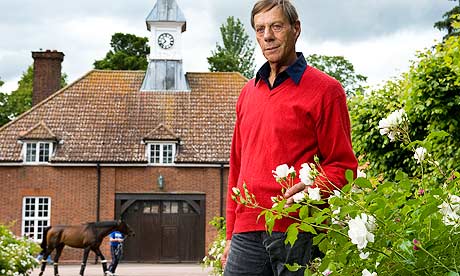
Henry Cecil, the legendary race-horse trainer, grew roses. When he had visitors to his stables at Warren Place, Cecil liked to show them his roses first. He knew all their names and habits, but he didn’t do any of the digging. Cecil had the same approach to growing roses, as he had to training race-horses. He knew what wanted, and he made suggestions. Cecil liked to win, and he knew how to get results by working through others.

Good growers and difficult deaths
I once had a garden with old roses, the prickly kind, with purple heads, and grey-tinged leaves. Unlike Cecil, I did all my own digging and pruning. I collected horse-manure in black plastic bags from urban stables. Friends, who knew about these things, said the horse-manure was not yet mature; warned me that it would burn the roses if allowed to come in contact with the stems. I put it on, anyhow. What I enjoyed was watching the roses grow, and flower, and fade. Each day there would be something new to see and admire, or fret about. Some roses look better when they are giving up the ghost. Others, like Albertine, don’t die well. After Albertine has flowered, the rose-heads stick around on the branches, and turn a stubborn brown.

Acting a bit sniffy
Since I moved house, I have had to rely on other people’s gardens for a rose fix. I want to be amazed, but even in the red velvet presence of a William Lobb, I feel indifferent. These roses are nothing to me. They are not yet in bloom, or they have just ‘gone over’. And even when the flowers are in peak condition, the perfume is pathetic, and the petals are too pink. None of the specimens in other people’s gardens makes me speechless.

Never knowingly overestimated
Why am I insensible to other people’s flowers? Is it a question of ownership? Something clicked, when, along with 500 others, I went to hear Rolf Dobelli talking about his book ‘The Art of Thinking Clearly’. Rolf was charming, modest and immediately disarming. He said he never expected so many people to come. According to Rolf, it is much more common that we overestimate our knowledge than we underestimate it.  Rolf is debonair. Swiss, he could pass for Italian, any day. In his book, Rolf describes different types of ‘bias’. For example, someone we know sets up their own business, and does extremely well. Because they are like us, we overestimate our chances of doing the same thing. We forget that most start-ups fail within a few years. Rolf calls this ‘Survivorship Bias’.

Now that Rolf has implanted the idea of bias in my mind, I think I may be suffering from ‘Ownership Bias’. Parents dote on their children, and people with pets – in my experience – are just as bad. So it is with me, and the roses that I have grown. Having prepared the soil, planted, fed, and pruned a rose, not to mention the hours spent tying back an unruly climber, I may well overestimate their good points. Naturally, I am amazed when a rose that I have grown flowers for the first time. I wonder if Henry Cecil suffered from ‘Ownership Bias’? Or did he just need to find a use for all that horse-manure? I think I’ll write to Rolf about this. I am sure he will be interested.

23 June 2103

Thanks for reading my blog. If you liked this page, you might like to check out my business website which has more content on leadership and learning.

www.kellowlearning.com

Saturday, 8 June 2013

Town or Country? Could you live in a small island community?


Caroline and Vic catching up on their holiday reading
"I'm so tired of the squalor and the grime of the city" Richard Rodney Bennett, 1978

I remember, in the 1980s, quite sensible people decided to leave London and move to Brighton, or the West Country. ‘To hell with London’ they said.  And having packed up, and shacked up, by the sea or in the woods, how they did go on about not missing London at all.

I stayed, because I could go to ‘Pizza on the Park’ to see jazz singers like Richard Rodney Bennett and Marion Montgomery. I once heard them do “Let’s go and live in the country”. It’s a comic duet written by Bennett about a couple who flirt with the idea of living in the country, and then rush back to the city, because they are allergic to hay, and know they couldn't cope if the roof started to leak. I used to agree with them.

Recently, however, I’ve been having thoughts about going to live by the sea, getting an Irish Terrier, and growing vegetables. A short holiday in the Western Isles of Scotland gave me a chance to weigh the pros and cons of staying put, or going for a complete life change. This is what I learned.

What are the gains of island life?
  • The freshest, most gulpable air. In the spring, the island air is even sweeter with the scent of bluebells.
  • Being part of a real community. They have a ceilidh when they think they need one, and anyone can join the dance. Children dance with their parents, and dogs are most welcome.
  • Time goes further, spread over long days and short nights. I had to learn how to take my time. When I rushed to the only shop to buy a missing ingredient for supper, the locals gently reproached me. “People are a bit more relaxed here”.
  • Spirit raising views. The sea and the hills change colour with the light and the weather. Watching Rum from Eigg is like being at a Son et Lumiere show, powered by nature. The best thing about Eigg is the view of Rum, according to the people who live on Rum. But they would say that, wouldn’t they?
What do islanders give up?
  • Globalisation, things like the energy crisis. Eigg produces more electricity than the residents can use
  • Commuting to work; it doesn’t happen
  • Any desire for national or international news. It’s irrelevant
  • Having to remember to take your keys with you. No-one bothers to lock their door
  • Consumerism, though the village shops are well stocked, and Amazon does good business
  • Traffic, except when people are arriving or departing on the ferry
  • Noise, except birdsong and – I suspect – the sound of raindrops and howling gales.
What is the person specification for an islander?

Ability to have many jobs, or none
Islanders have multiple identities, and many hold down different jobs. The Harbour Master, without whom the boat cannot arrive or depart, also drives the electric buggy, mends the road, and tends the trees. The lady who cooked you a splendid dinner, also runs the bakery. Your dance partner at the ceilidh, pops up in the tea shop to serve you coffee and cakes, and later arrives to prepare your accommodation for the next group. Everybody else is unemployed, or has no obvious responsibilities.

Tolerance
You are unlikely to take to island life unless you can learn to tolerate midges, tourists, alcohol, unpredictable weather, and things left where they were last used or needed e.g. tractors, baths, bits of machinery.

Other skills, knowledge and attitudes that will serve you well on a Scottish Island are:
After a week exploring the Western Isles of Scotland, beautiful as it was, I think I will stay in the city, and holiday in the country. I am allergic to hay, and if the roof began to leak, I would definitely need a man with a beard. 

Thanks to everyone living in the small isles who made us feel welcome.

Song: ‘Let’s go and live in the country’1978, Richard Rodney Bennett


8 June 2013


Thanks for reading my blog. If you liked this page, you might like to check out my business website which has more content on leadership and learning.

www.kellowlearning.com


Sunday, 19 May 2013

Five things I learned about leadership on a Leaders’ Quest


What can you learn from spending five days having conversations with people who are not obviously like you, and who know and do things you may not understand or care about? Quite a lot, as I found out when I went on a leadership journey organized by Leaders’ Quest. I have been home, physically, for two days, but in my mind I am still on the road. I need more time to digest what I saw and heard. Meanwhile, here are five things I learned:

1 How milking with Paul beats sitting with Mary
‘Sitting with Mary’ used to be how one learned to do a job. You sat, you listened, you observed, and you asked questions. And sometimes you got to practice, too. Last week I was given the chance to ‘milk with Paul’. Cows are very large animals, they poo and pee a lot, and they don’t like strangers in their milking parlour. This means you need highly developed skills and awareness to have someone shadow you when you are milking 187 cows in a confined space. Paul, the cowman, who looked after me, demonstrated phenomenal technical, spatial, communication, time and risk management skills. I learned a lot about how to lead from Paul.

2 Collaborative Inquiry not Interrogation
The conversations that worked best for me were the ones where the people we met had questions for us, too. Let me try to explain. If you tell me what you do, and then I tell you what I do, then we both know, what we both know. Whereas, if there is time, and the conditions are right for dialogue, new questions will emerge, and quite possibly we will discover valuable learning points together.  Firing questions at people may result in a diminished learning for all, because the thing you think you need to know, may not be as valuable as the knowledge or experience your interlocutor was going to share with you. If only you had let them.

3 Ditch your titles
We are conditioned to recognize people by their role, and job title. When you meet someone for the first time, hearing a job title may help to understand who you are speaking to: Banker, Consultant, Entrepreneur, Ex-Offender, Husband, Finance Director, Mother, Piano Tuner, Student. Husband, Mother, and Newly Redundant don’t work so well. If you want someone to remember who you are, it is essential to say something about yourself that will help them understand what you do, and, hopefully, arouse their curiousity.

4 Leadership and Learning
‘Leadership and Learning are indispendible to each other’, as John F Kennedy has said. For me, the people we met who were consciously learning from their challenges and opportunities, tended to be the most inspiring leaders. I’m thinking of a manager at a social enterprise who knew everyone by name, a school student in a new Academy, a probation officer who always took the difficult path, a banker who wanted to be a painter, Jimmy Mizen’s family, a piano tuner whose home is London, and who has no home.

5 The Kindness of Strangers
Perfect strangers can be exceptionally kind. Again, and again, we met people doing difficult things, who were patient, open, thoughtful, generous, compassionate, funny, and respectful to us, and to each other. With leaders like these, seizing the opportunity to tell them how great they are at what they do, was a privilege and a pleasure.

Monday, 6 May 2013

The Pixar Pitch and Other Sales Tips from Dan Pink

If you need to brush up your selling and influencing skills, Dan Pink’s new book ‘To Sell is Human’ has some practical suggestions. Though I would not recommend all of them to all of my friends. Because selling is very personal, and you have to be yourself to engage people. As I found out. But I’ll tell you about that later. 

I sold young ladies for a living
Having recently gone freelance, I need to sell myself constantly. I used to make a living out of selling other people. I sold young ladies quite successfully. About one a week, on average. I was a recruitment consultant. Right now, I am trying to sell a new careers development workshop for recent graduates who want to work in sustainability. The drive for a green growth, coupled, sadly, with high youth unemployment, makes me suspect there is a need for a course that will help young people to help themselves find jobs. 

Don't sell what interests you
I’ve got a plan to deliver a course that will be an inspiring and memorable experience. But as Dan Pink says, I need to communicate not what interests me about the course, but what will attract potential participants. Forming a lifelong long network of people who want to work in sustainability is, to me, the key to future happiness and prosperity. Whereas the participants probably just want to know that handing over two hundred pounds will make a difference to their job prospects. What I am thinking about now is the need to have a clear message for potential participants. What is the goal of the course? What will they learn, and how will this help them find a job in sustainability? 
The PIxar Pitch
One of the tools that Dan Pink offers is ‘The Pixar Pitch’. Emma Coats, a former Pixar story artist, has created a six sentence template for an irresistible story: 

‘Once upon a time _____. Every day_____. One day_____. Because of that_____. Because of that_____. Until finally_____.’

And so it happened, that on a Holiday Monday, I tried to use Emma Coats' template to create a pitch for my workshop ‘Pathways to Sustainability Career’.

‘Once upon a time it was difficult to find a job in sustainability. Every day, young people applied for jobs, but it took a lot of time, and some gave up looking because of the rejections and the competition. One day, young people came together to learn more about jobs in sustainability, and what kind of skills and experience are needed. Because of that, young people wrote better applications and felt more energised and supported. Because of that, more young people got jobs in sustainability, and were able to influence change. Until finally, the network became so valuable both personally and professionally, that young people wondered why they had waited so long to get together.’

Questions work better than answers
Another of Dan Pink’s selling tips is that asking questions is a more effective way of engaging people than giving answers. Asking questions makes people think. So what do you think? Does my ‘PIxar PItch’ make you want to come on the course?

Selling is personal: be yourself
One more thing. I promised to tell you about my brush with inauthenticity when selling. I was trying to write a strap line for my website. I was so convinced by Dan Pink of the value of asking questions, that I turned my strapline into a question. I’m too embarrassed to share it with you. I sent my brilliant strap line to a friend who works in communications, and also to my web-designer, who happens to be American. I thought, being American, that she would like Dan Pink’s influencing style. Both my web designer and my friend came back with the same message: ‘Interesting idea! But it’s not you.’ They are, of course, quite right. But do read Dan Pink's book 'To Sell is Human'.
Thanks for reading my blog. If you liked this page, you might like to check out my business website which has more content on leadership and learning.

www.kellowlearning.com

Saturday, 20 April 2013

Pathways to a sustainability career


Young people doing it for themselves

I’m collaborating on a leadership development workshop for recent graduates who are looking for their first job in sustainability. It took me twenty years to realise I wanted to work sustainability. Now, twenty years later, I’m piloting a workshop to help recent graduates find a quicker route into a sustainability career.

How a little philosophy can help you work in sustainability

I have a hunch that there are a lot of graduates like me, who took degrees in subjects like Fine Art, Philosophy, and French, and want to work in sustainability. And like me, when I was their age, they don’t know what kind of green jobs there are, where to look for them, or how to get through the recruitment process.

Mid-career, multi-lingual and multi-talented: the new global leaders

What if young people on Facebook knew how to create their own professional networks? What would happen if they used their power to help each other to grow and develop, the same way folks who are on Linkedin do? I was having a coffee with one of my students recently. Julia is mid-career, multi-lingual, and multi-talented. She is part of the Linkedin generation: people who can do business in at least three languages, and are accustomed to changing the company they work for, and the country where they live, about every three years. She met a bunch of guys on a sustainability leadership programme, and they stayed in touch. Why? Well, first of all, they like each other. They have become close friends, and they have fun together. The glue that keeps them together is one part shared values, and two parts a common desire to make a difference to world. They understand the need to live and work more sustainably, and they are excited about the opportunities, locally and globally, to change the way we do things.

Networks are good for individuals and organisations

They also help each other with their careers. The Linkedin generation do business together. The fact that they know each, and trust each other, is making it easier for corporations to talk to corporations. Nadia and her network are working together to measure and reduce corporate carbon footprints, locally and globally. None of this would be happening to the same degree, if Nadia and her friends had not met on a leadership programme, and formed a network that works for them at both a personal and professional level. If all networks worked like this, might we all become better connected, more creative, happy and contented?

Can’t young people get jobs through Facebook?

Why can't the pre-Linkedin generation have the same opportunities to motivate and support each other?  That’s what Facebook is for, I hear you say. Yes, and no. Facebook works very well as a means to share photos and stay connected with friends and family all over the world. It’s good for launching projects, promoting causes. I still think there is a need for something that allows you to do more than ‘Like’ what your friend had for breakfast. And I detect a kind of snobbery about Facebook, which means it may not be the best place to look for a job. Quite the opposite in fact. Employers use Facebook to eliminate job applicants.

The power of collaboration

This is why I am collaborating with friends on a leadership workshop for recent graduatesIt’s a collaborative event because I believe it is important to walk the talk. I want to show the participants how a highly motivated team working together can create a transformational learning experience.
We want to share what we have learned from working in different areas of sustainability. We want to showcase different pathways to a sustainability career, and demonstrate how to build a self-sustaining network that will benefit participants, personally and professionally. Above all, we want the participants to leave ‘Pathways to a Sustainability Career’ feeling confident about their choice of career, and with an increased awareness of how to network and support each other in the future.